In most academic settings, an egregore is described as a kind of collective mental formation - a shared psychological construct that comes into being when a group of people hold the same beliefs, participate in the same rituals, and commit themselves to the same ideas. From that perspective, an egregore is created when a common theme is established by a group and then reinforced through repeated actions and emotional investment over time.
But that explanation only scratches the surface, especially for anyone who has actually been part of an initiatic or fraternal tradition. The academic definition explains the mechanics, but it does not fully capture what this concept means to groups that take their symbols, rituals, and obligations seriously.
Mark Stavish describes an egregore as “an autonomous psychic entity created by a collective group mind,” something that grows stronger through belief, ceremony, and consistent practice. James Wasserman goes even further, describing them as being “built and sustained by group ritual, shared practices, hierarchical teachings, and inner doctrines.” When these ideas are considered together, a fuller picture emerges.
An egregore is something a group creates, yet it is also something that gradually takes on a life of its own. It is shaped by the minds, intentions, and actions of those involved, but it becomes more than any individual. It is, in a very real sense, a kind of group soul formed and sustained through unity of purpose.
This distinction matters when we speak about a lodge forming an egregore. We are not simply referring to friendship, fellowship, or the general spirit of brotherhood. In the deeper and more esoteric sense, the egregore of a lodge is a very real presence. It is not physical, but it is nonetheless influential. It arises when the members repeatedly work the same rituals, speak the same oaths, and aim themselves toward shared moral and spiritual ideals.
Over time, this presence becomes coherent enough to feel almost independent. It is not alive in the ordinary sense, yet it carries memory, identity, and character. It becomes the atmosphere and spirit of the lodge - the subtle presence you sometimes feel as you cross the threshold into the lodge room, even when the chairs are empty and the lights are dimmed. That sensation does not arise from the space alone, but from what has been impressed upon it through years and generations of Masonic work.
The physical surroundings of the lodge quietly reinforce this presence. Photographs of Past Masters lining the walls are not mere decoration; they serve as silent witnesses. They anchor the egregore to the lodge, reminding those who labor today that they stand within the sacred space of those who worked long before them. Each image, each plaque, and each worn piece of furniture carries a memory, reinforcing the sense that the lodge is more than a meeting place; it is a living inheritance.
The same is true of the stories passed from older members to newer Masons. Recollections of when the ritual seemed especially alive and brotherly love radiated from all add to the lodge’s inner spirit. These stories shape how new Masons understand the lodge and their place within it. In the telling and retelling of these stories, values are reaffirmed and expectations are clarified. Individual memory is transformed into a part of the collective soul of the lodge.
The history of the lodge itself adds another layer to the egregore. Its founding and its periods of growth and decline all contribute to it. When this history is known and honored, the lodge becomes something worth preserving. In this way, memory becomes more than recollection; it becomes the life of the lodge, and that spirit is sustained not only by ritual but by the conscious act of holding the past in reverence while continuing the work in the present.
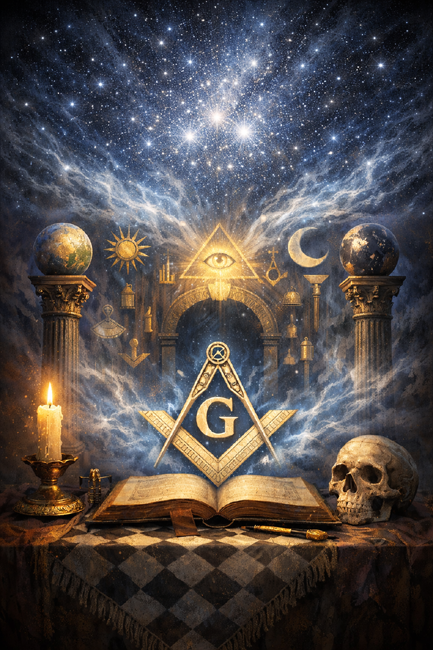
For a Masonic lodge, this means that every opening and closing, every obligation taken, and every sign and prayer adds another layer to the lodge’s spirit. With each familiar symbol—the Square and Compasses, the Three Great Lights, the Pillars, the letter “G,” and the Sacred Book—the egregore gains depth and meaning.
As the years pass and membership grows and changes, the egregore of the lodge slowly adjusts to all who have labored within its walls. In a very real way, each of us adds to or changes the spirit that lives within the walls of our lodge. Once we understand the lodge as something that possesses a life of its own, it becomes clear that every individual Mason contributes to the health or the decay of the spirit that resides in our sacred space.
A Brother who arrives with sincerity, humility, and a genuine desire to improve himself strengthens the egregore. His presence adds to the strength of the lodge. Even small acts, such as listening attentively, participating in ritual, encouraging a newer Brother, or approaching the work as something sacred rather than routine, feed the egregore. Over time, these positive efforts give the lodge an atmosphere of harmony, trust, and brotherhood.
The opposite is also true, and this is where the concept becomes sobering. Persistent negativity, cynicism, or ego damages the egregore of the lodge. When Brothers habitually complain, undermine leadership, or sit on the sidelines holding discussions and disregarding the ritual in the lodge room, it changes the soul of the lodge. The egregore becomes distorted, less focused, less receptive, and more fragmented. Rituals feel flat, the candidate receives an experience less inspirational than they desire, and the sense of commitment to those who labored before us begins to erode.
Luckily, a lodge’s egregore is rarely destroyed by a single bad night or difficult personality. Rather, it weakens through repeated patterns that go unexamined and unchecked. The strength of the lodge rests not only on ritual work but on the daily moral and emotional discipline of its members. Each Mason, whether he realizes it or not, is either standing watch to preserve the Light or slowly allowing it to dim.
So, while an academic might call an egregore a psychosocial construct and an occultist might describe it as a subtle entity, a Mason may come to understand it as something even more personal: a quiet guardian of the lodge and the unseen witness to every gavel strike, every initiation, and every sincere effort to journey from darkness to Light.
WB Robert Easton, PM
Porter Lodge No. 137



